News & updatePublication
SOS method published in Research in Engineering Design
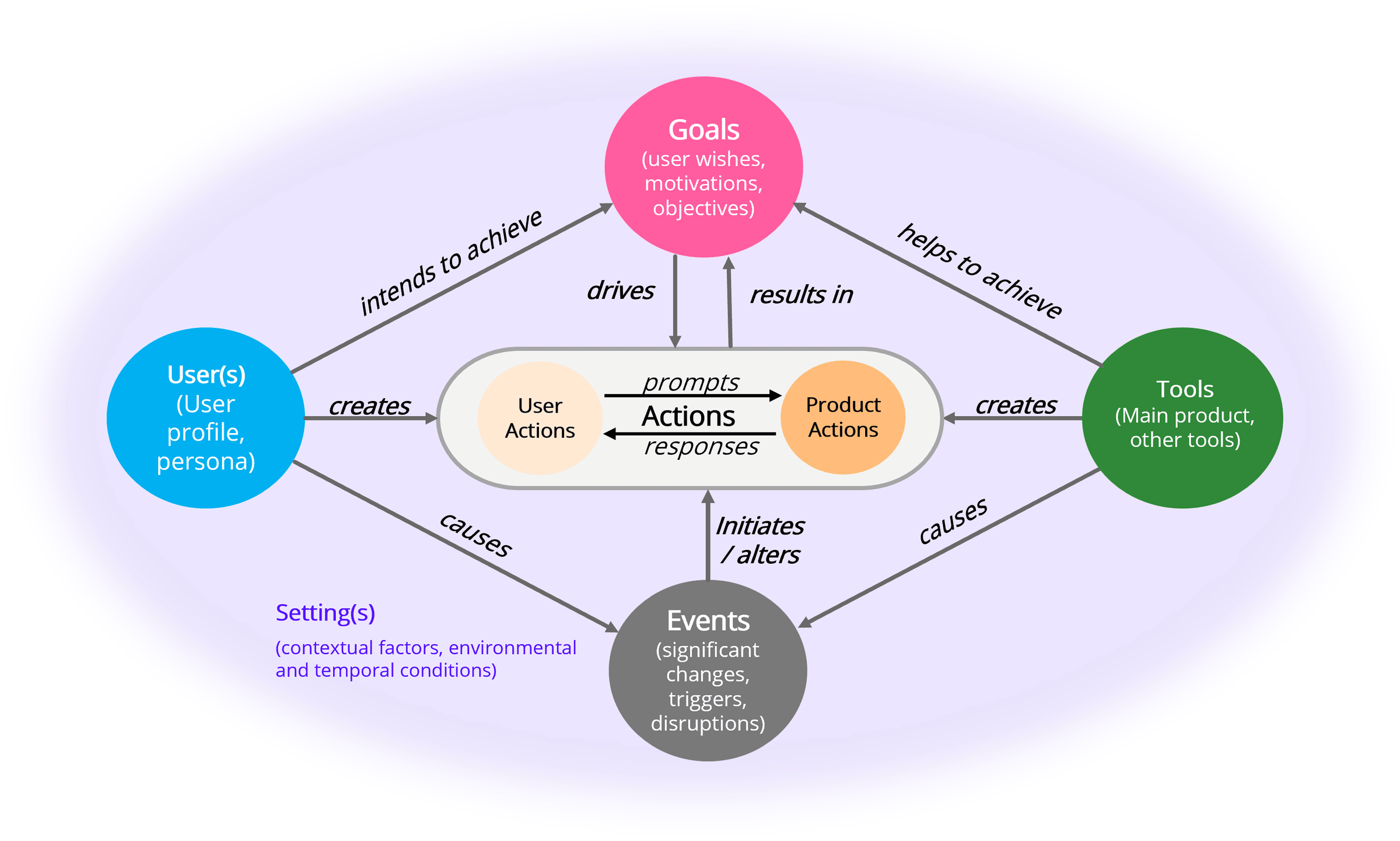
Our article “Scenario-Oriented Specification (SOS): a design method for translating user scenarios into engineering specifications”, written with Prof. KwanMyung Kim, is now available in Research in Engineering Design (volume 37, article 36).
The problem. Narrative user scenarios carry context and intent, but engineering teams need formal requirements and specifications. The article calls this break the experience–specification gap and treats it as a problem of representation.
The method. SOS links scenario elements, interaction sequences, functional requirements, components and engineering specifications through persistent identifiers, so that every specification can be traced back to the user situation that motivated it.
The evaluation. The method was applied over the Lemmy companion-care robot project across 15 user scenarios, with observation and interviews with 12 experts. In that project, 244 coded scenario elements became 104 interactions, 144 functional requirements, 100 components and about 312 engineering specifications. A further step, spatial integration (deciding where components sit in the product), emerged during the project and became part of the method.
SOS is the subject of my dissertation and the basis of the SOS Tool, a web tool that supports this workflow with human-in-the-loop AI.