Industry / government-funded project
Combat backpack
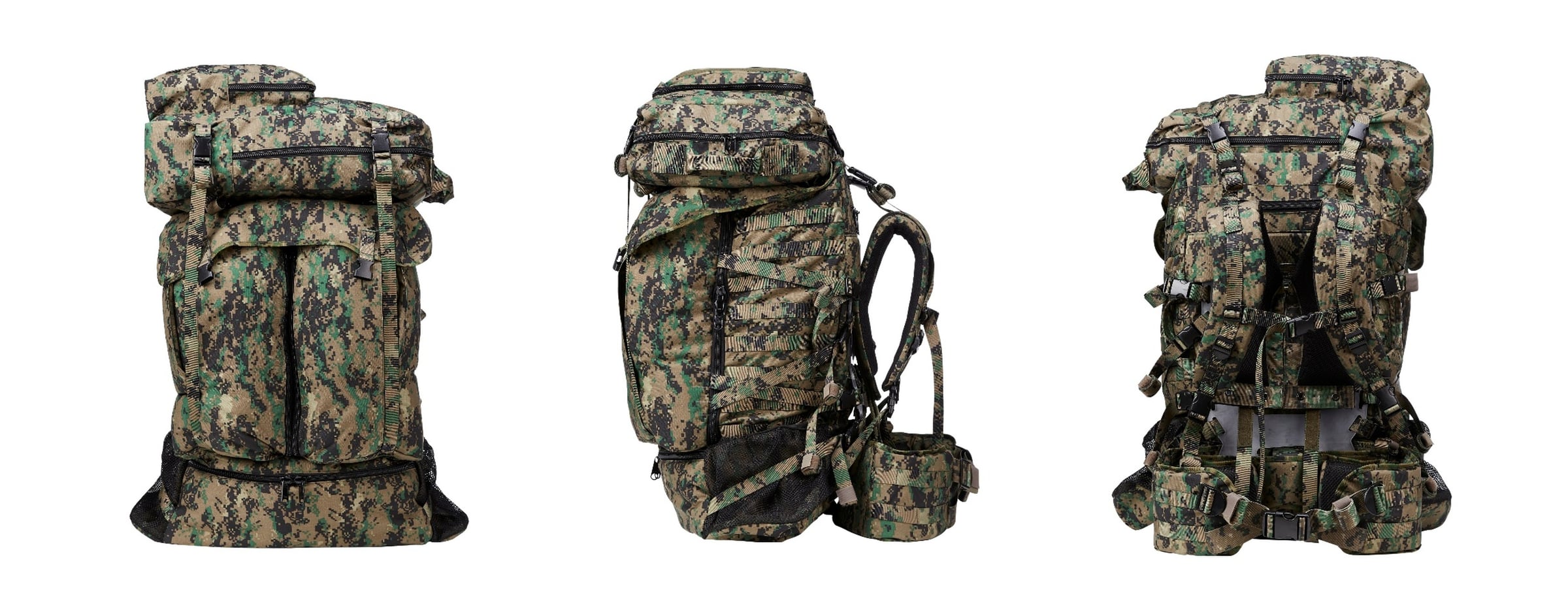
Design and development of a modular special-forces backpack with a carbon-fibre frame optimised for weight distribution.
Project facts
- Period
- Jan 2022 – Dec 2025
- Funding / client
- KRIT (Korea Research Institute for defense Technology planning and advancement)
- My role
- UX Researcher, Industrial Designer
- Organisation
- IID Lab, UNIST with NH Co., Ltd.
Context
A national defence R&D project, run under the Civil-Military Technology Cooperation programme and managed by KRIT, to develop a lightweight, modular backpack system for Korean special forces. NH Co., Ltd. led the project and the system integration; UNIST was responsible for the frame and the weight-distribution system, and for usability evaluation.
Challenge
Special-forces operators carry heavy loads for long periods, and packs that do not transfer weight to the pelvis put them at constant risk of back injury. There was also no device or protocol to measure objectively how well a backpack distributes its load.
My role
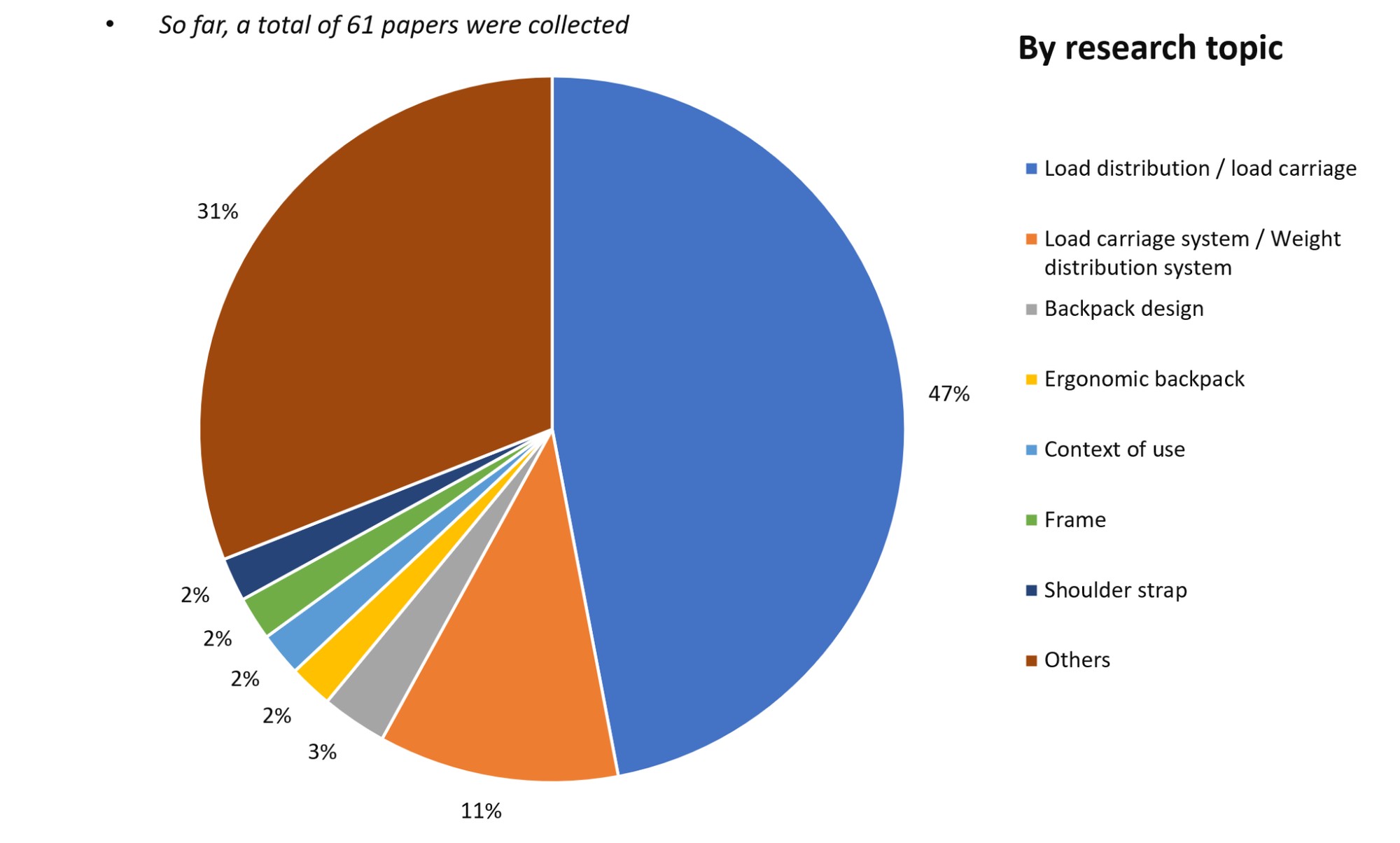
- Requirements from research. I reviewed the literature on load carriage and injuries (61 papers collected by March 2022), studied female-specific needs, and benchmarked military and outdoor packs to draft the design requirements.
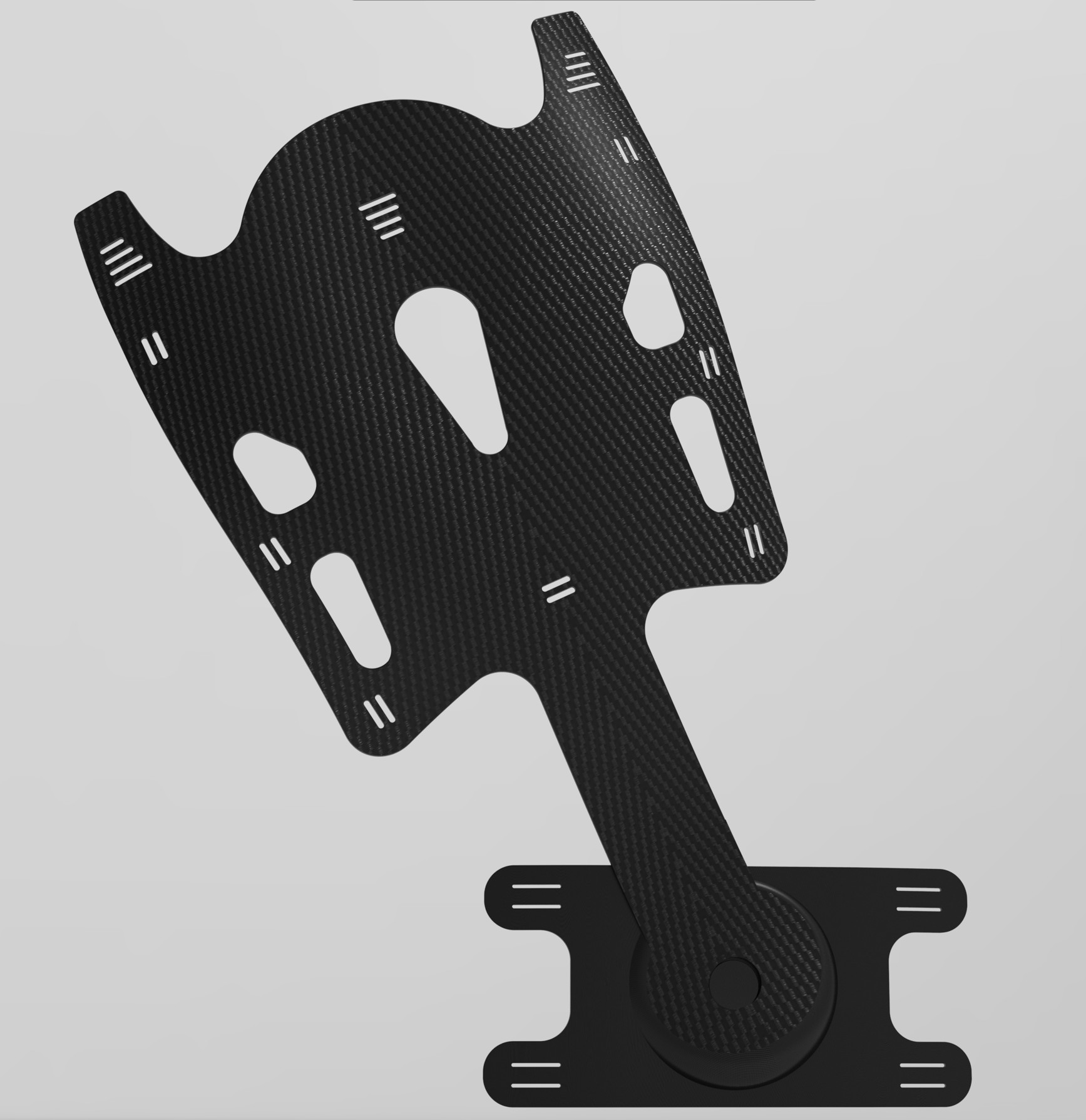
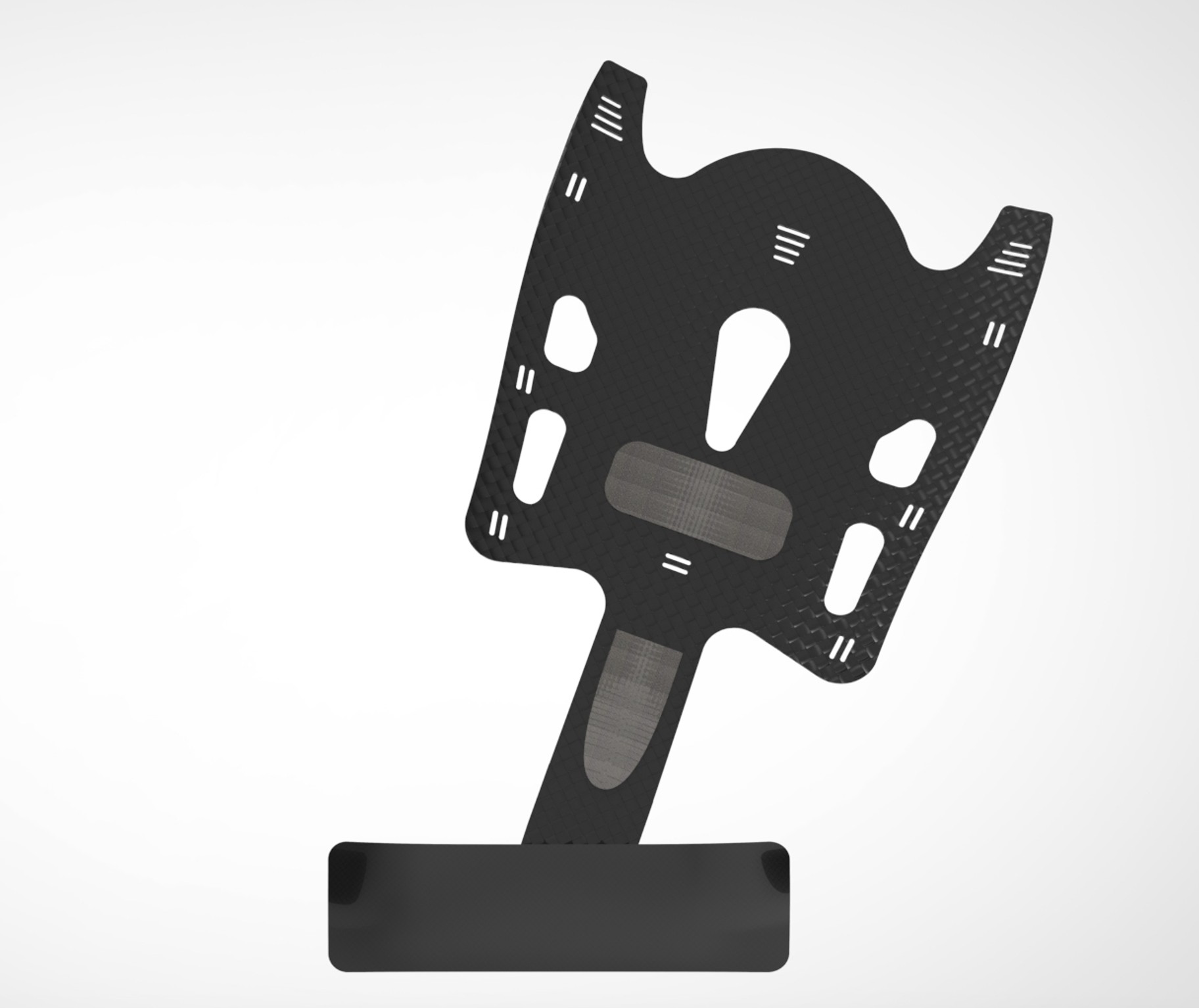
- Frame concepts. I developed frame concepts in SolidWorks — elastic suspension, a pivot point in the upper lumbar area and a one-point hip-belt connection — that informed the final carbon-fibre frame.
- Testing. Later I contributed to the weight-distribution measurement device and its tests, and to a usability study with 60 participants, where I helped design the experiment, facilitated about half of the sessions and prepared the heart-rate and questionnaire data.
Process
Literature to requirements. The review covered load distribution, load-carriage systems, backpack design, ergonomics and context of use, and fed directly into the requirement list.
Frame ideation. I moved from sketches to CAD concepts: a frame that pivots in the upper lumbar area so the pack follows the body during walking, and a one-point hip-belt connection. The team's concepts were reviewed with NH against durability, comfort and load distribution, and the final curved carbon-fibre frame was developed from this stage.
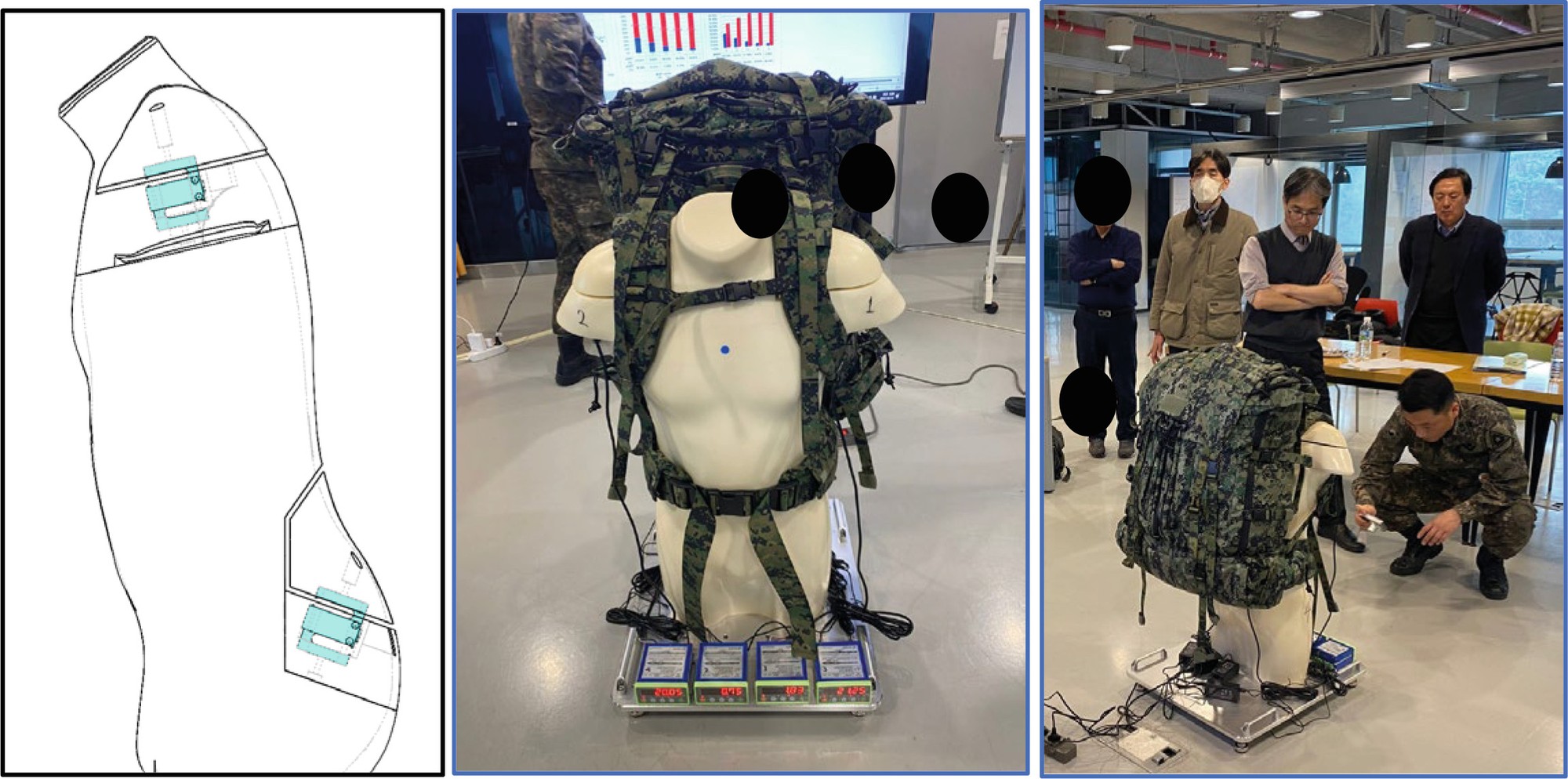
Measuring weight distribution. The team built a torso mannequin with four load cells that measures how much of a pack's load reaches the shoulders and how much the pelvis. In the published test with a 35.1 kg pack, adjusting the straps moved the pelvis share from 63.6% to 97.6%.
Deliverables
- Design requirements from the literature and benchmarking
- Frame concepts and CAD models that informed the final frame
- Contributions to the measurement device, its test protocol and the usability study
The work led to a registered design and two patent filings (co-inventor), including a measurement system for evaluating how a backpack distributes load across the body.
Outcomes
Patent filings (Military Backpack; weight-distribution measurement system) and a registered design (Backpack Frame) as co-inventor; IEA 2024 congress paper.
Related work4
Device Design for Measuring Weight Distribution Performance of Military Backpacks
Lee, D., Kim, J., Kwon, U. J., Saduakas, A., Ismatullaev, U. V. U., & Kim, K.
Conference paperProceedings of the 22nd Congress of the International Ergonomics Association (IEA 2024), Vol. 5, pp. 447–452, Springer Nature Singapore2025DOI 10.1007/978-981-96-9334-4_66
Military Backpack
Co-inventor, UNIST & NH Co., Ltd.
Patent applicationKorean Patent Application No. 10-2024-0139602 (Publication No. 10-2026-0053831)2026DOI 10.8080/1020240139602
Backpack Weight Distribution Measurement System
Co-inventor, UNIST & NH Co., Ltd.
Patent applicationKorean Patent Application No. 10-2025-0021221 (Publication No. 10-2026-0029200)2025DOI 10.8080/1020250021221
Backpack Frame
Co-inventor, UNIST & NH Co., Ltd.
Registered designKorean Registered Design No. 30-12906012025DOI 10.8080/3020240038213.M001