Individual project
Novy — smart stool for elderly care
A smart, multifunctional stool-and-storage robot concept for older adults in small homes, used as the case product in scenario-to-specification workshops.
Project facts
- Period
- 2024 – present
- My role
- Designer
- Organisation
- IID Lab, UNIST
Context
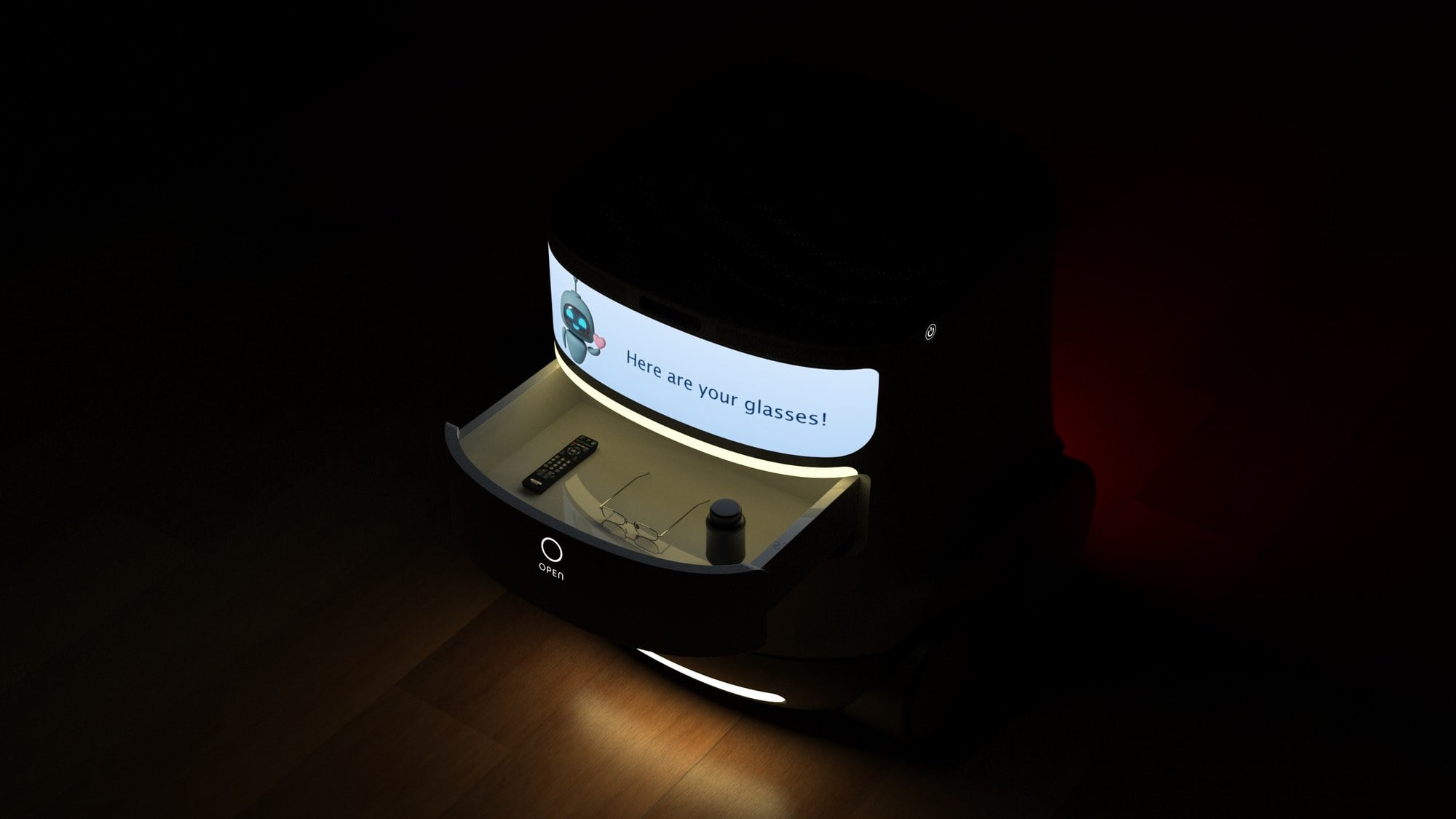
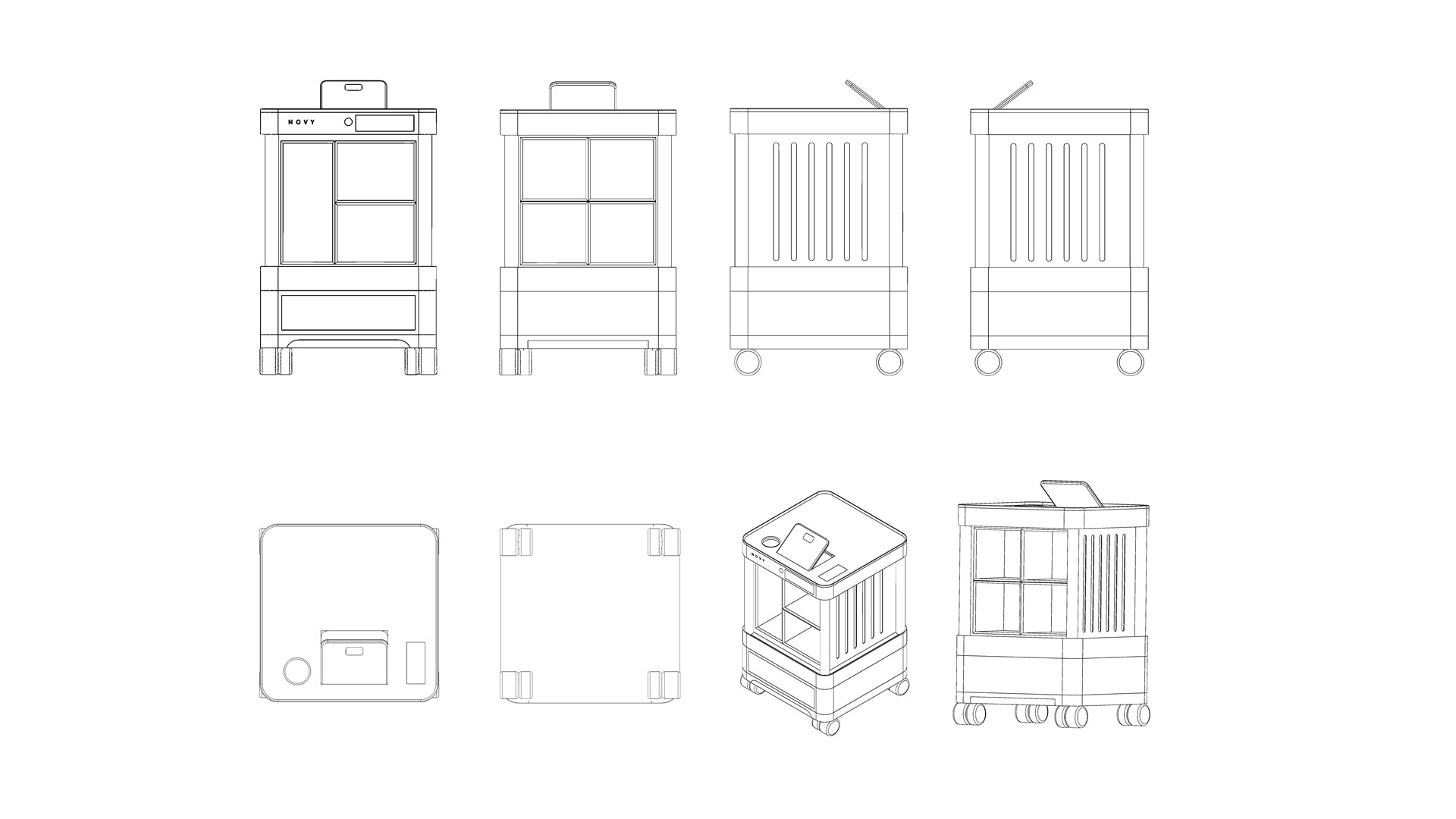
Novy is a concept for a smart, multifunctional piece of furniture that supports older adults living in compact homes. It combines a stool with a cushioned seat, modular storage compartments and wheels, and moves on its own when asked — for example, “Novy, bring me the glasses” — before returning to its corner.
Challenge
The concept starts from observations of older adults' homes: a smaller radius of activity because of mobility difficulties, little space in small apartments, and difficulty keeping track of small items.
My role
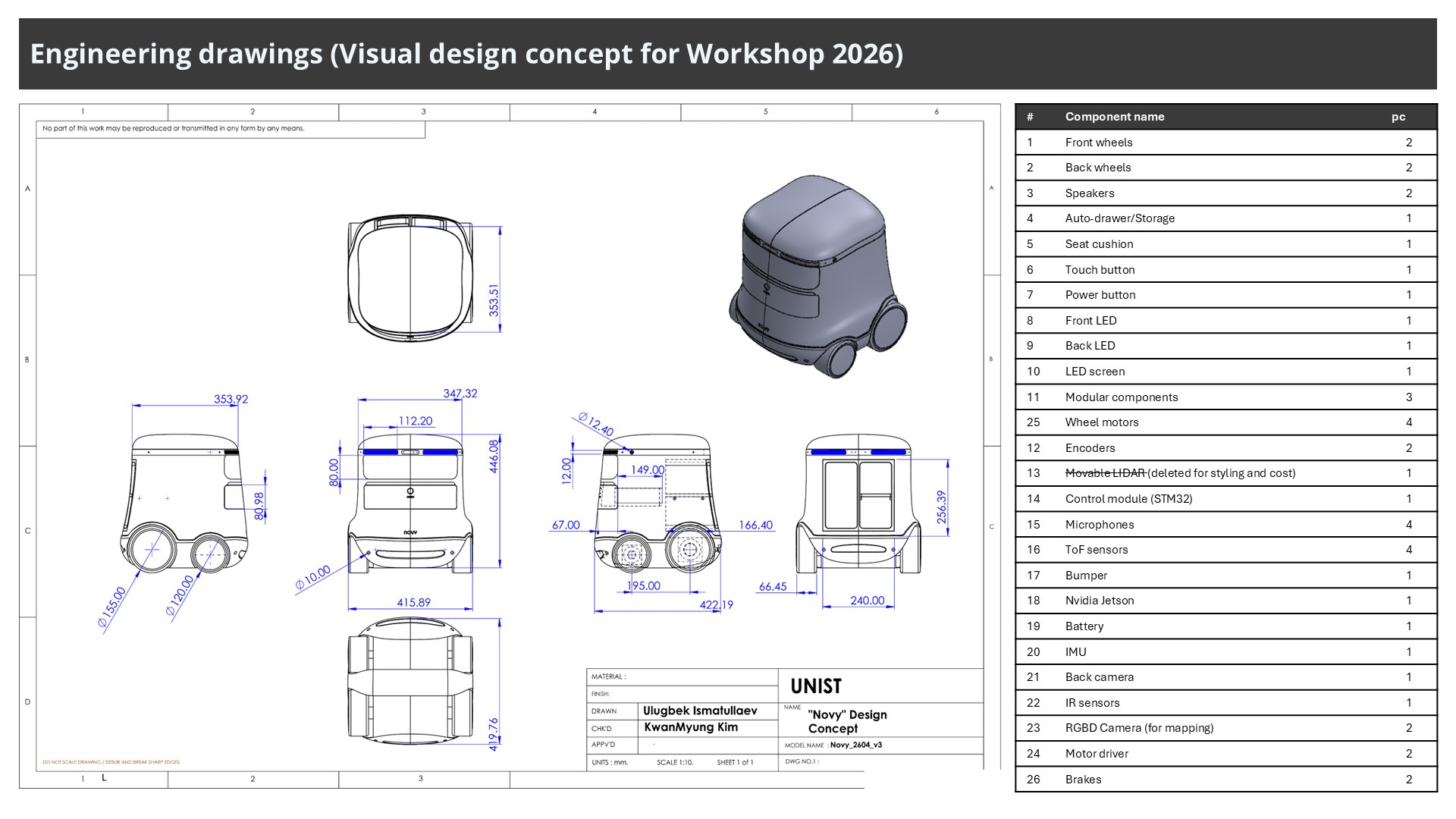
I created the concept, the scenarios and the visuals, and drew the 2026 engineering drawing with its component list (checked by Prof. KwanMyung Kim).
Process
Concept. The design went through three concept rounds, from first line sketches of a “smart stool” to detailed renders in home settings.
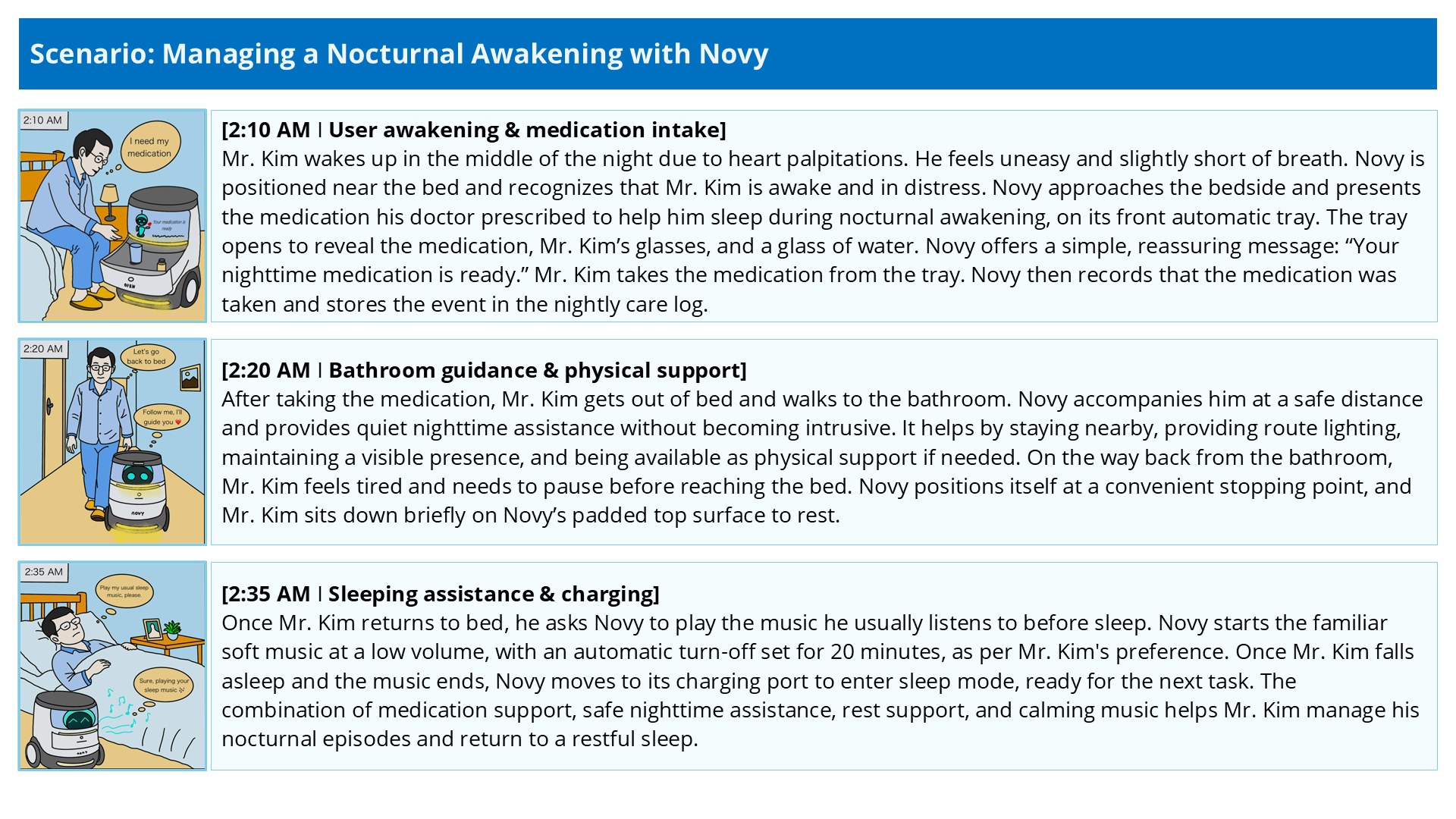
Scenarios. Personas and day and night scenarios — such as finding the glasses in the morning, or a nocturnal awakening that calls for medication, guidance to the bathroom and a place to rest — turn these needs into functions.
Workshops and engineering. Novy serves as the design brief and case product for the scenario-to-specification workshops held from 2024 to 2026, in which interdisciplinary teams turn the brief, the user profile and the scenario into functional requirements and engineering specifications. Workshop findings added engineering components to the design, and the 2026 drawing records the resulting layout and component list; a movable LiDAR was dropped from the design for styling and cost reasons.
Novy is a design concept: no physical prototype or user test has been made yet.
Outcomes
Concept renders, personas and day and night user scenarios, and a dimensioned engineering drawing with a component list (2026); used as the design brief in scenario-to-specification workshops from 2024 to 2026.
Related work1
Exploring the Role and Syntax of User Scenario Elements: Toward a Structured Framework for User-Centered Engineering Specifications
Ismatullaev, U. V. U., & Kim, K.
Conference paperIASDR 20252025DOI 10.21606/iasdr.2025.1104