Industry / government-funded project
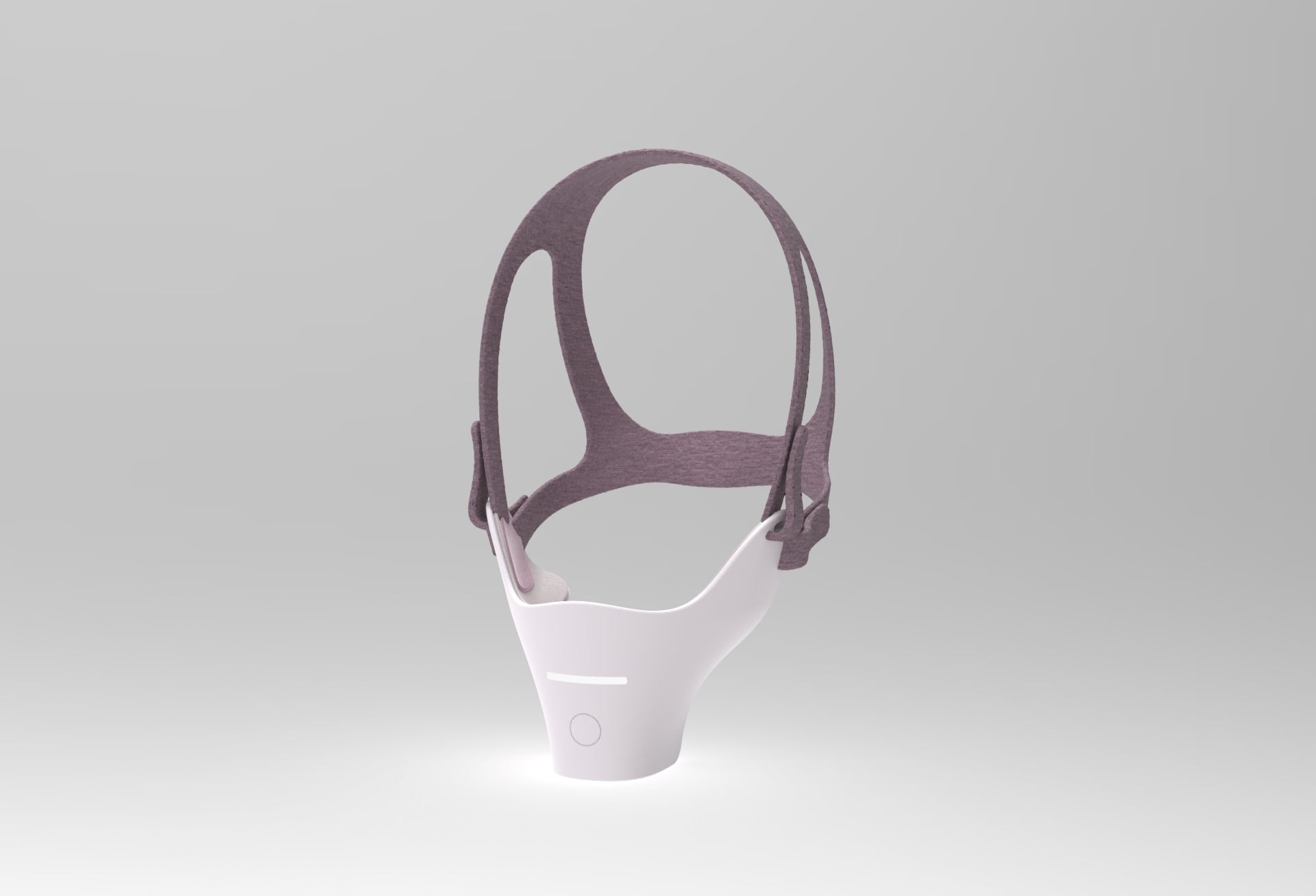
Umay — exercise-based dysphagia therapy device
Leading the design and development of a swallowing-exercise device focused on usability, accessibility and therapeutic effectiveness.
Project facts
- Period
- Sep 2022 – Apr 2024
- Funding / client
- UNIST (institutional research funding)
- My role
- Industrial Designer, Team Leader
- Organisation
- IID Lab, UNIST
Context
Dysphagia — difficulty in swallowing — is common among older adults and affects their health, confidence and social life. Umay is a device and companion app that turns the submandibular “push” exercise used in dysphagia therapy into guided, measurable training: the patient exercises against a pressure sensor under the jaw and gets real-time feedback through a game, while therapists can follow progress. The exercise is done in three forms — repetitions (isotonic), repetitions at a set pace (isokinetic) and holds (isometric); at beginner level that means 30 repetitions, 30 repetitions at one per second, and four 15-second holds. The project continued a 2021 master's graduation project in the IID Lab, which had produced the original concept, user research and game interface.
Challenge
To measure the exercise, the device has to read a clean pressure signal from under the jaw, yet it must also fit many different heads comfortably. There was no published anthropometric data on the jaws of older Korean adults to design from.
My role
As team leader I led product design from functional solution and sensor testing through ergonomic solution, 3D modelling, layout design and the aesthetic solution:
- co-wrote the 2022 development plan and the first concepts with Donierbek Abdurakhimov;
- organised the sensor tests and 3D-modelled the headband version in SolidWorks;
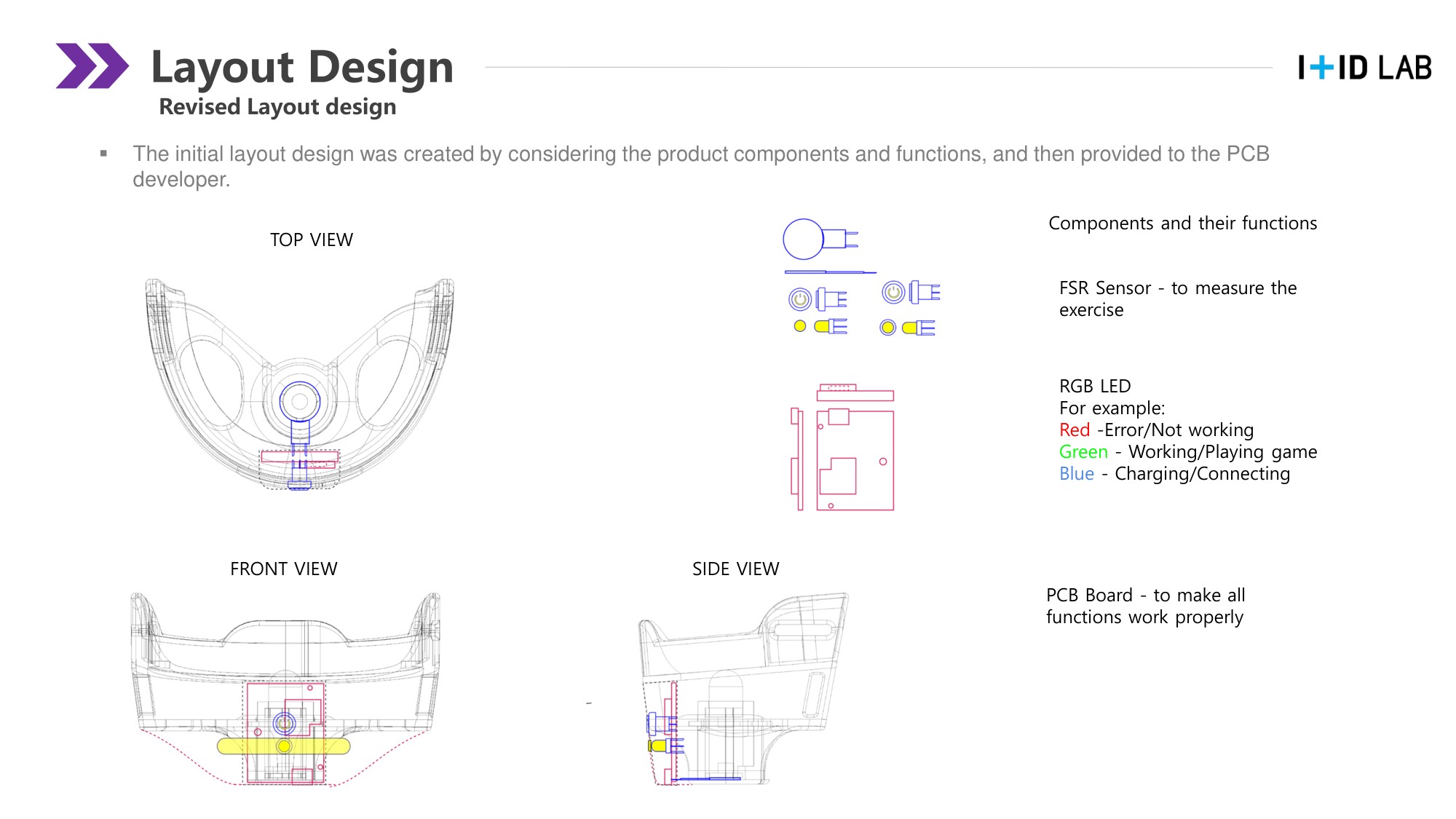
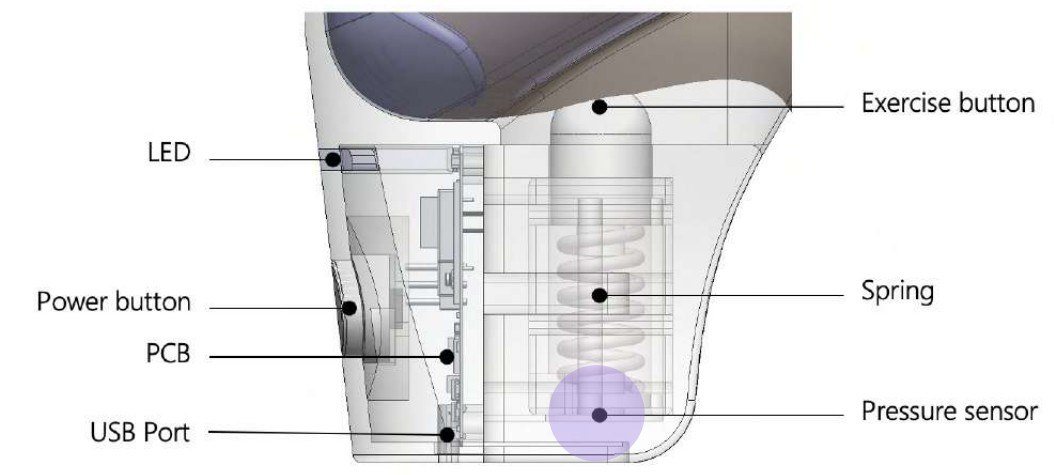
- specified the layout of the sensor, PCB, switch and LED for the electronics developer;
- compiled the 79-page 2023 project report and proposed and modelled a re-design in 2024.
Process
Concepts. Five concepts in two directions — headband types and neck-brace types — led to two parallel designs: a headband for mobile use and a neck brace for use at home or in hospital.
Signal and mechanism. Four sensors were tested by loading them in steps over three attempts: a fabric pressure sensor (Loomia), two force-sensing resistors (FSR; Marveldex RA12P and RA18) and a flex sensor. The smaller FSR was so sensitive that it picked up the wearer's breathing; the 18 mm RA18 gave the most accurate and stable readings at low cost and was selected. A flexible headband gave an unclear signal, so the design moved to a rigid jaw unit with a spring mechanism that keeps the sensor pressed, with straps and cushions for comfort.
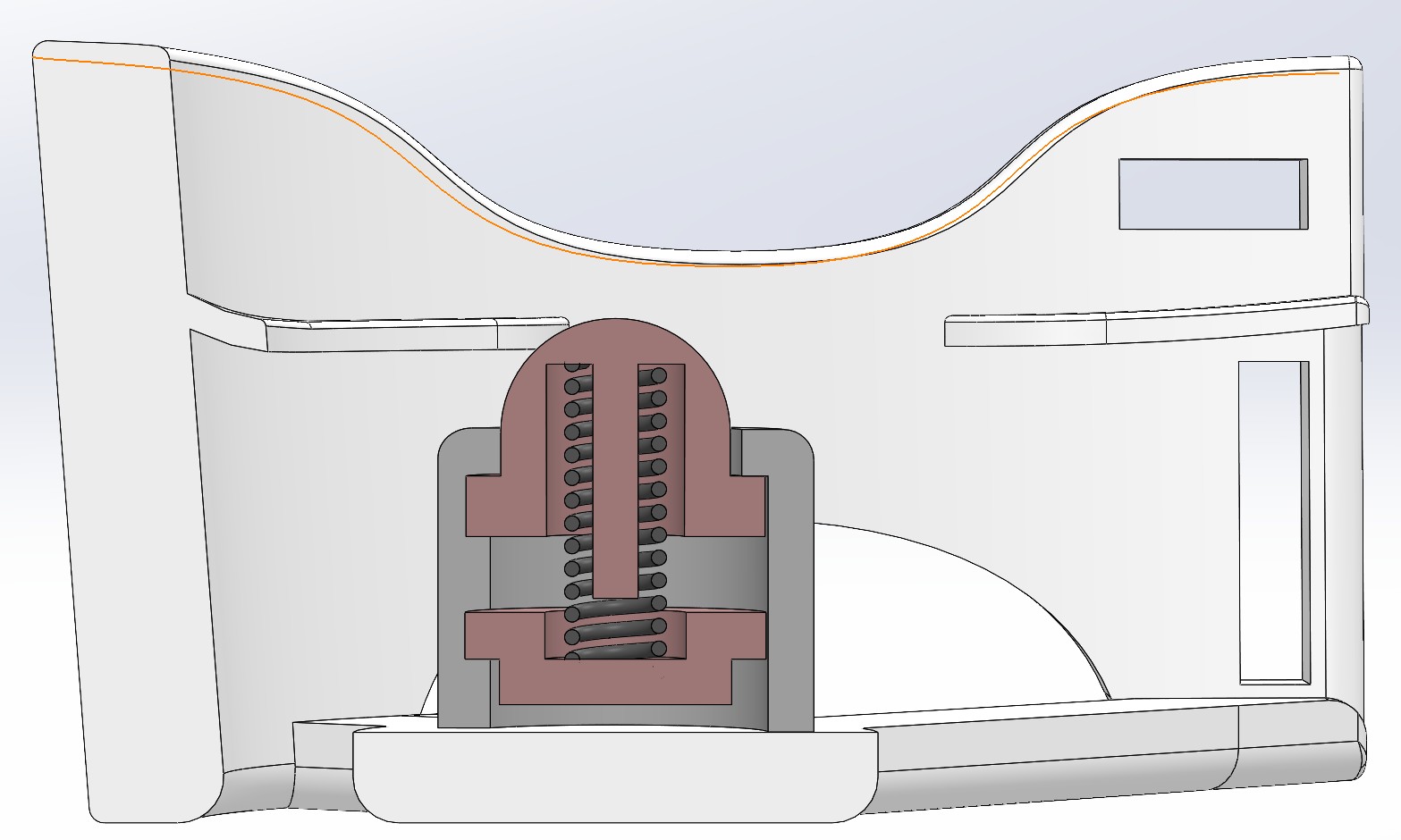
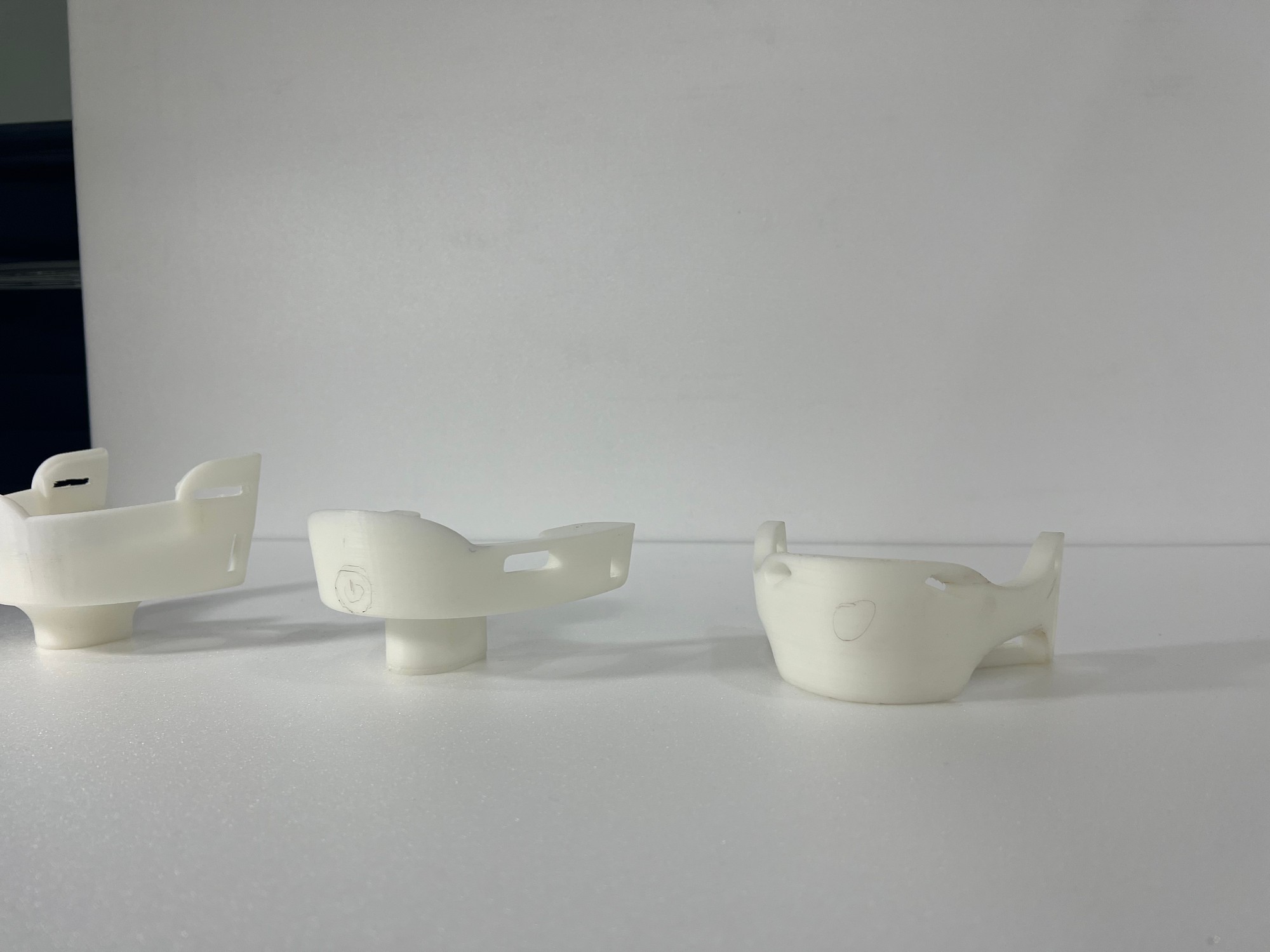
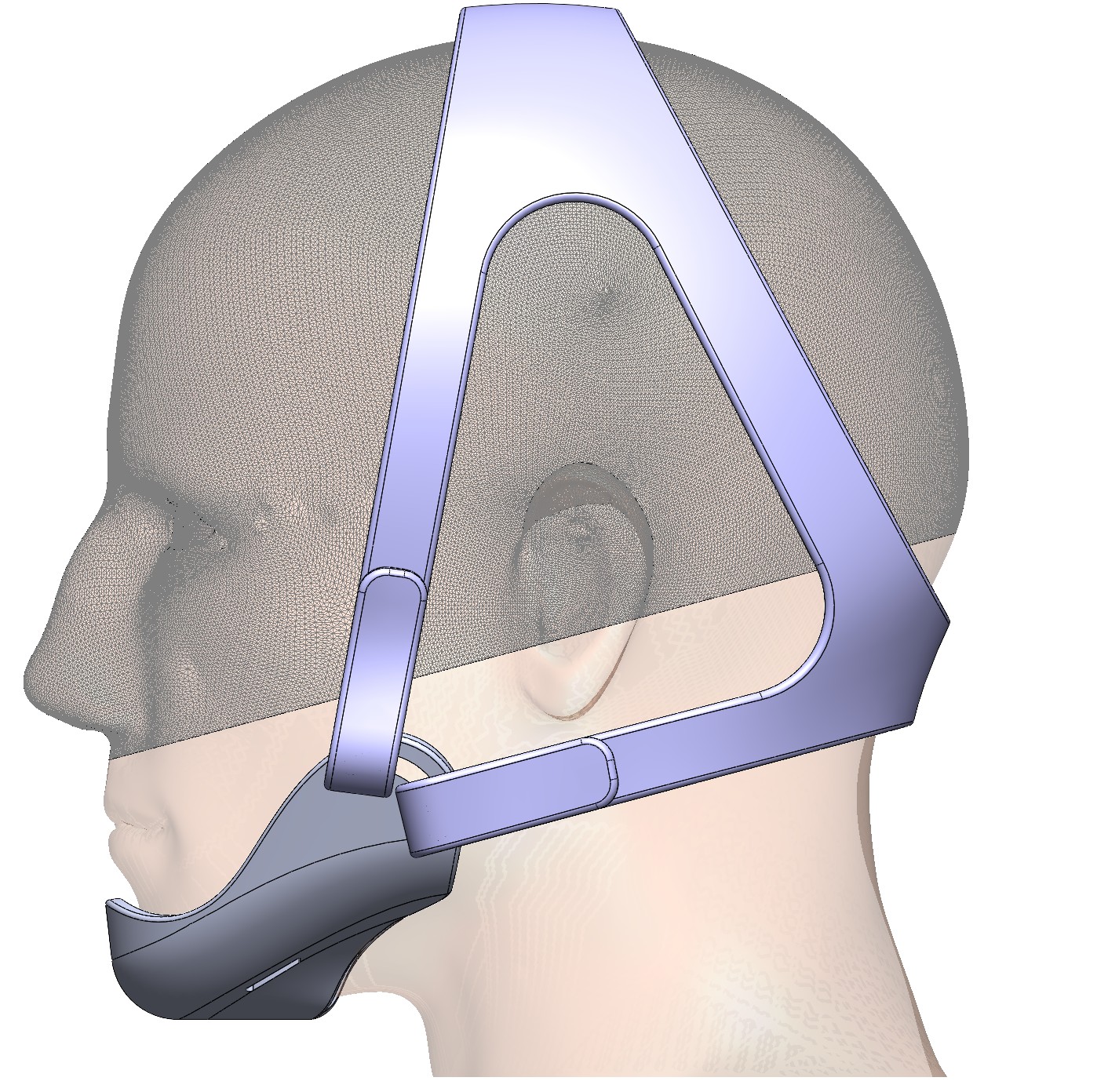
Fit. Two ergonomic requirements guided the form: the unit must sit firmly under the jaw so the sensor gets a clean signal, and it must fit comfortably and adjustably on as many users as possible. No published jaw dimensions existed for older Korean adults, so the team combined the literature with measurements taken from SizeKorea 3D scans and set reference values: a jaw width (gonion to gonion) of 111 mm for women and 124 mm for men, a jaw length of 86 mm and 95 mm, and a 111° jaw curve. Early 3D-printed prototypes were fitted on project researchers; a gap under the jaw led to a curved jaw support matched to the head model, and the strap positions were fixed.
Integration. The final layout places the pressure sensor, a compact custom PCB, an RGB LED, a tact switch and USB-C power in one unit. The board stayed at 44 × 34 mm; the revised version carries one pressure sensor and no battery, with the USB-C port moved to the centre, so the unit is powered by cable. Because each board revision took the electronics developer at least two to four weeks, layout decisions had to be settled early. After comparing a magnetic latch, slide-and-lock and snap-fit closures, a magnetic latch was chosen for the enclosure.
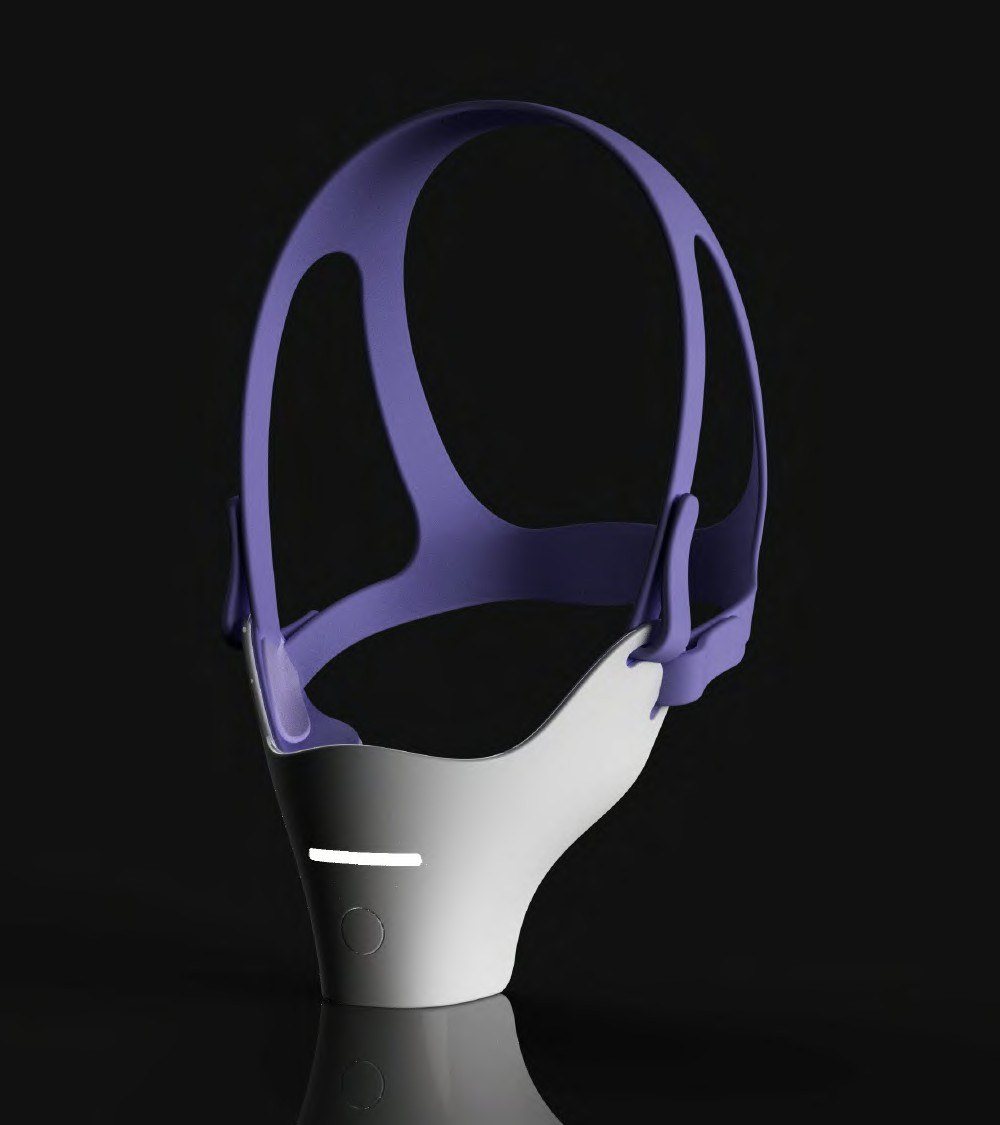
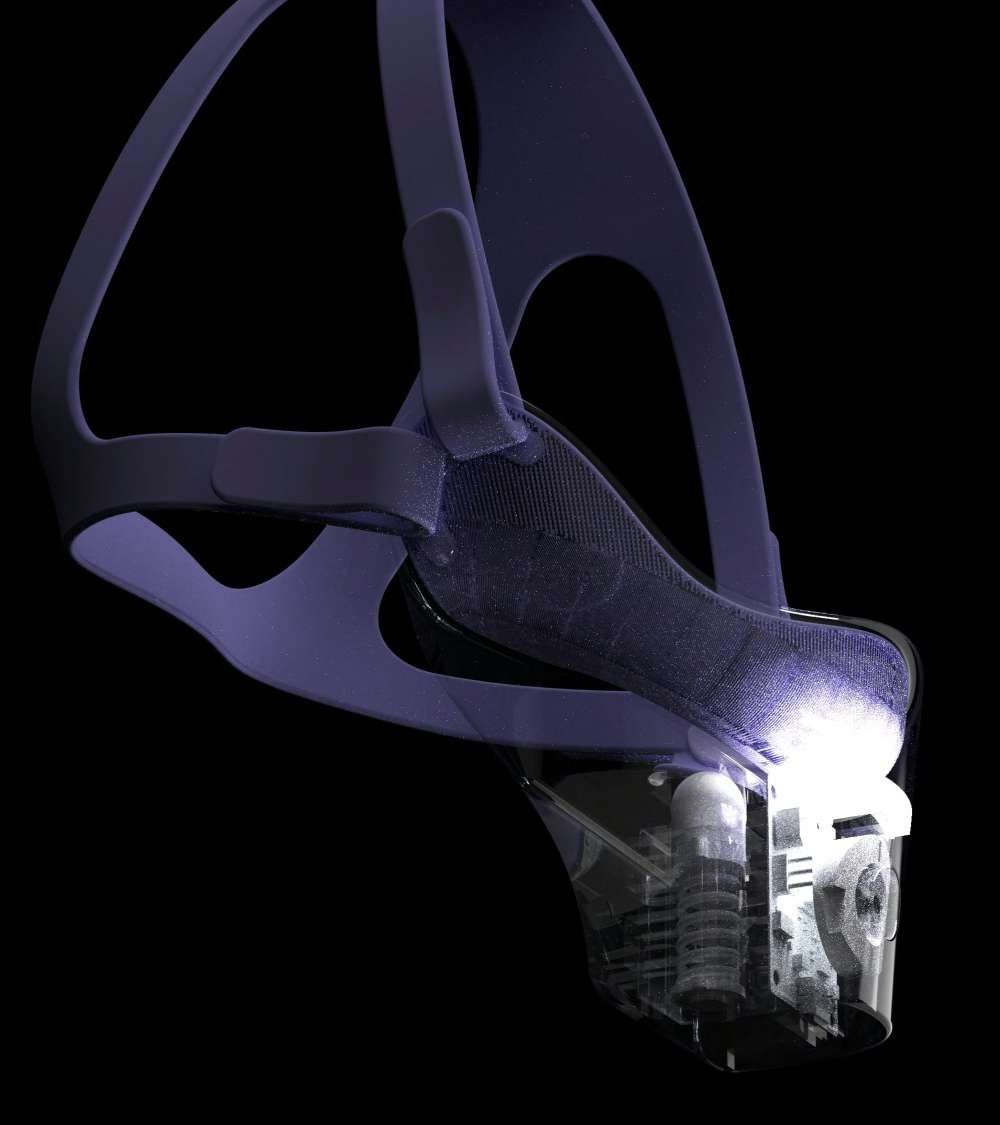
2024. In March 2024 a new four-person team planned the next phase: re-designing the device and the app, integrating the electronics, testing with users in hospitals or at home, and publishing. I worked on product design with Donierbek Abdurakhimov and proposed a re-design of the device.
Deliverables
- Concept sketches, CAD models and 3D-printed prototypes
- Sensor test results and the integrated sensor–PCB layout
- The 2023 project report
Prototypes were tested for fit on project researchers; no clinical or patient testing is documented for the period of my involvement.
Outcomes
Functional and ergonomic prototypes, sensor selection, an integrated sensor–PCB layout and the 2023 project report.