Industry / government-funded project
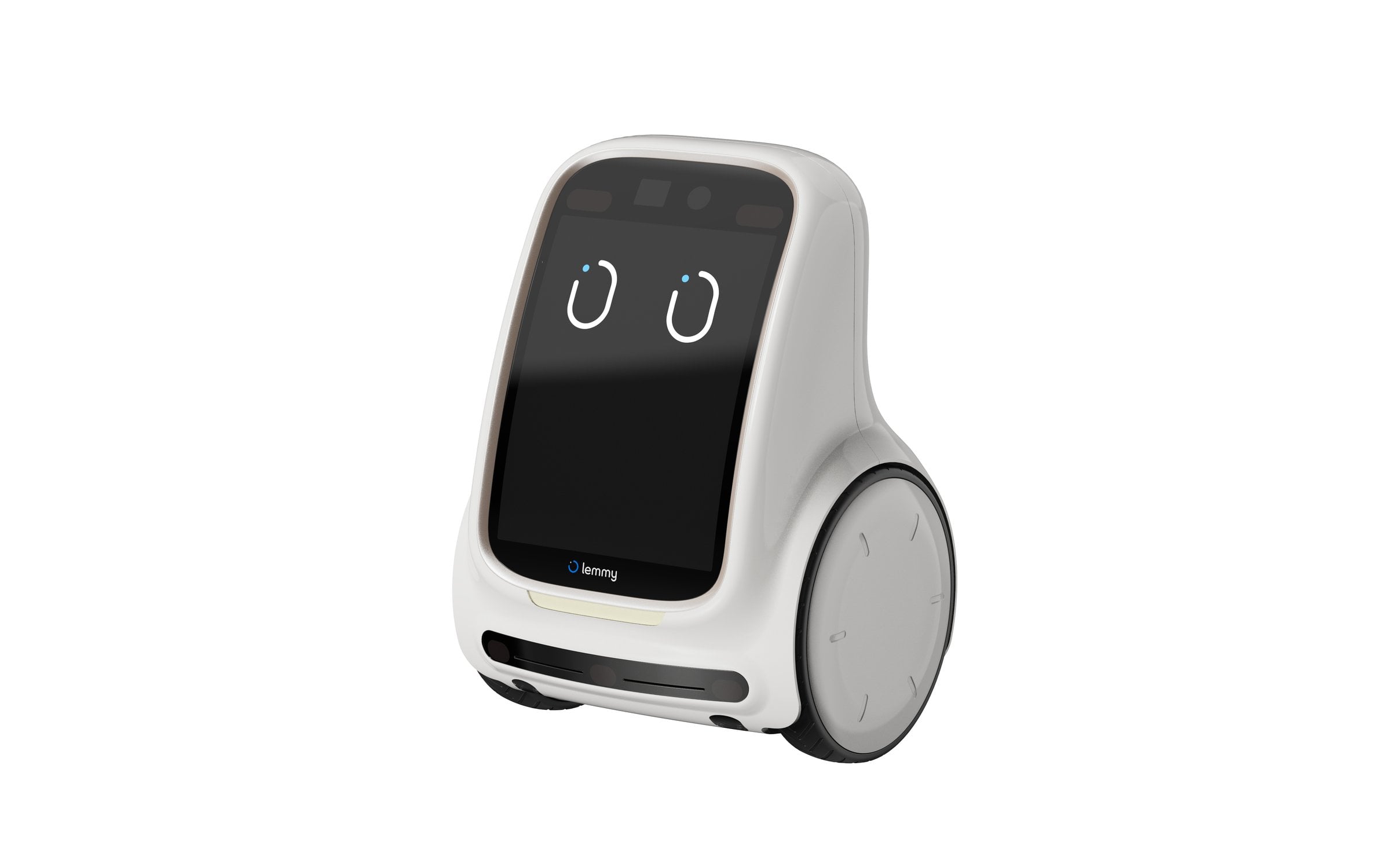
Lemmy — smart companion robot for the elderly
An AI-based companion care robot supporting elderly independence and emotional well-being, honoured with a CES 2025 Innovation Award.
Project facts
- Period
- Sep 2021 – Dec 2025
- Funding / client
- KEIT (Korea Evaluation Institute of Industrial Technology)
- My role
- UX Researcher; specification development lead
- Organisation
- IID Lab, UNIST
Context
Lemmy is a social companion robot for older adults who live independently at home. It was developed in the national R&D project “Commercialization design and development of Intelligent Product-Service System for personalized full silver life cycle care” (MOTIE/KEIT, task 20015056) by a consortium of UNIST, the manufacturer Shinsung Delta Tech and the design firm J Design Works. Besides the robot, the system includes a sensing pot that collects everyday data, an assistant caregiver device and an app for family members and caregivers.
Challenge
Care robots for daily living were mostly technology-driven, with little design input and no systems view. The team had to turn the needs of people in their 60s to 80s into behaviours a robot could actually perform, and then into requirements that engineers in three organisations could build against.
My role
- Specification development (lead). I led the translation of user scenarios into functions, components and engineering specifications, applying and refining the method that became my PhD research, and compiled the functions-and-components list for the prioritised scenarios (2023).
- User scenarios. Together with Bertha Barrera Garza I wrote the English scenario book (2022) that defines how Lemmy behaves. I tested the scenarios with older adults and experts and helped design the Kano-based evaluation used to prioritise them.
- Robot character. I contributed to the personas, the robot's personality, its size and form, and the expression catalogue — including the robot's voice (2025).
Process
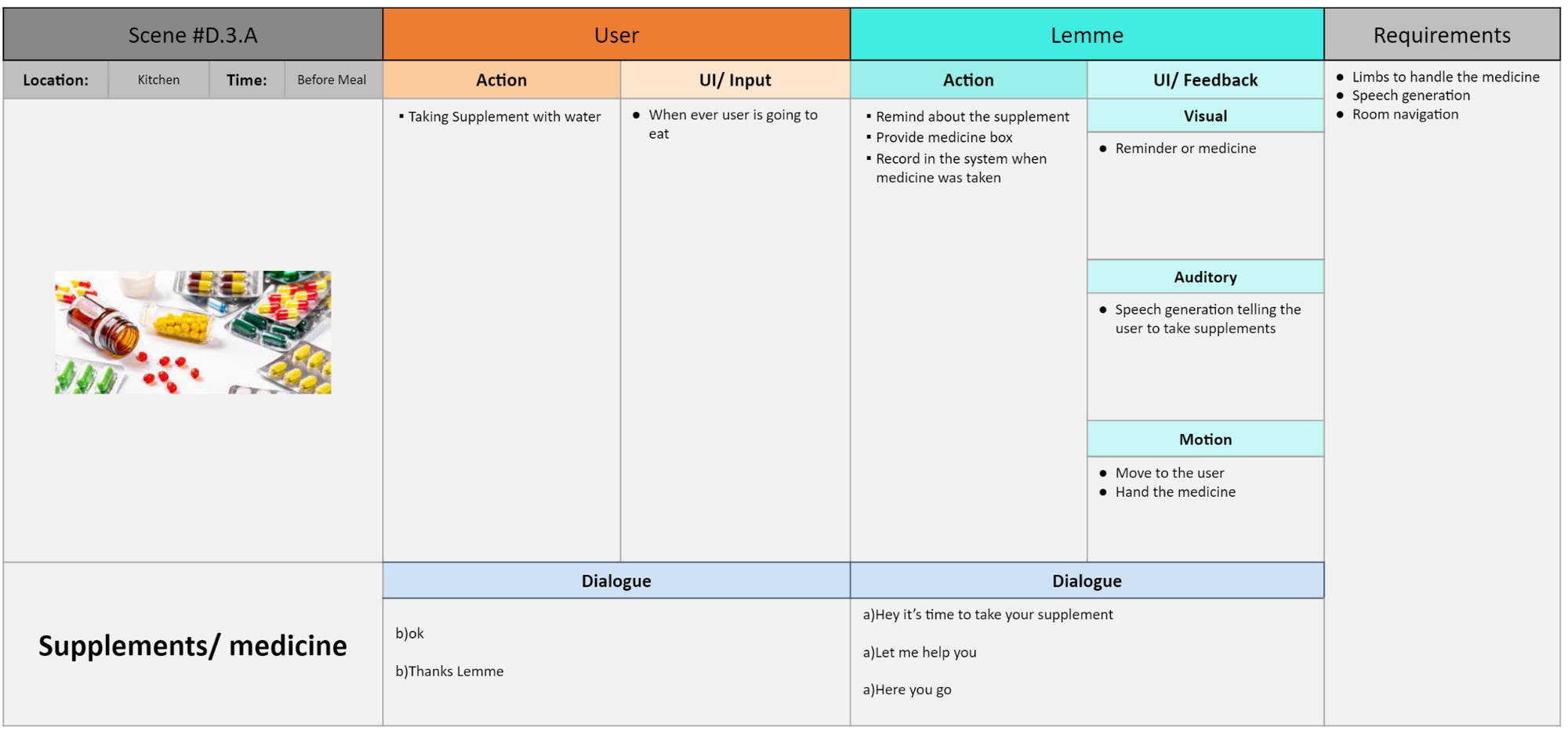
From research to scenarios. The team interviewed six domain experts, held focus groups with 12 older adults and visited 15 households to interview 16 older adults at home. This research, together with internal and external workshops, led to 47 scenarios grouped under seven need areas, from sleeping and medication to entertainment and social life. Each scenario pairs what the user does with how Lemmy responds — on screen, in sound and in movement. After expert and user validation they were narrowed to 15 priority scenarios, and a Kano-based evaluation sorted the functions into must-be (for example, emergency detection and medication reminders), attractive and questionable ones.
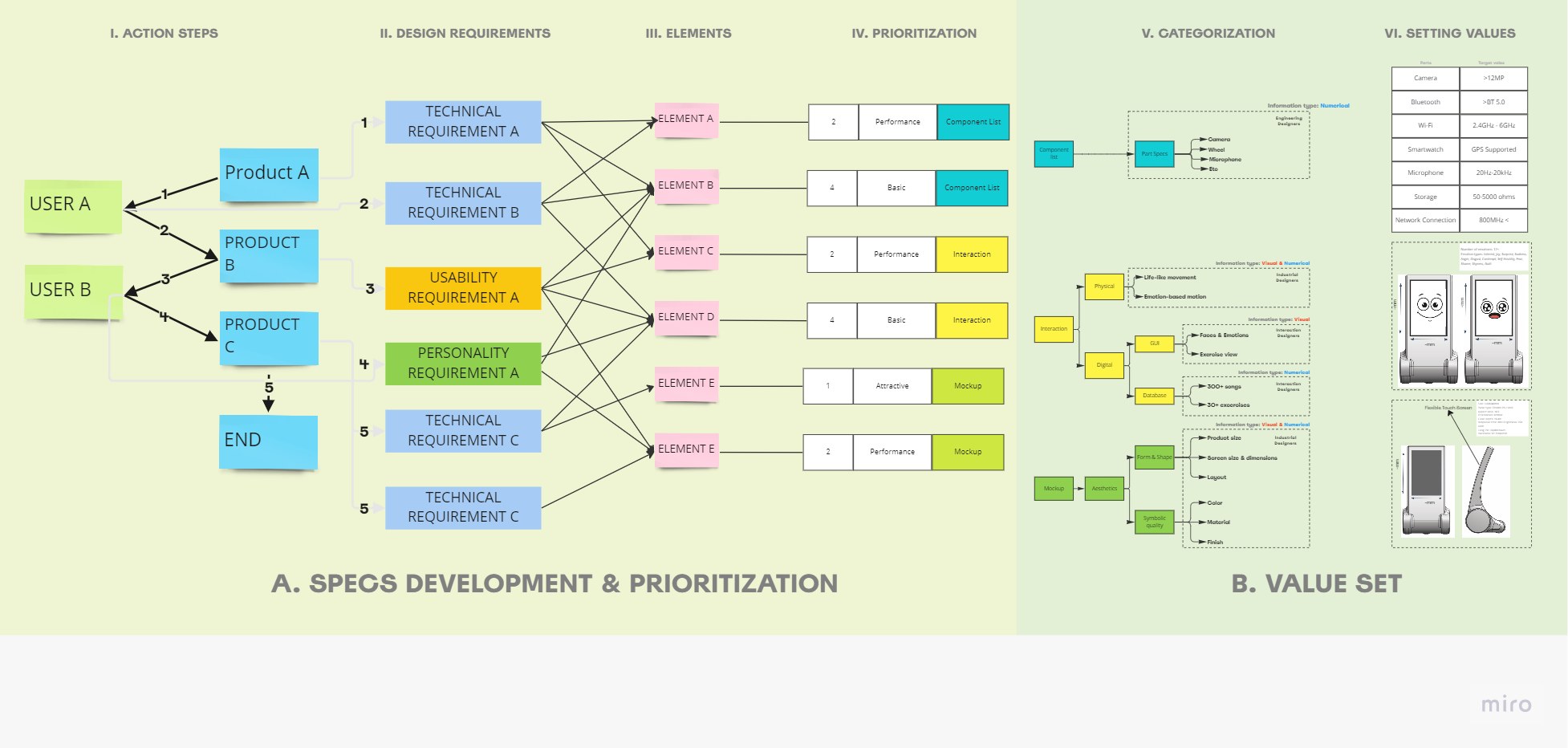
From scenarios to specifications. Each scenario was broken into action steps, then into design requirements, functional components and target values, so that designers and engineers worked from one traceable chain instead of separate documents. The approach was first tested with the project's 28-person design and engineering team and was later published as the Scenario-Oriented Specification (SOS) method; the scenario-to-specification method became one of the project's design guides.
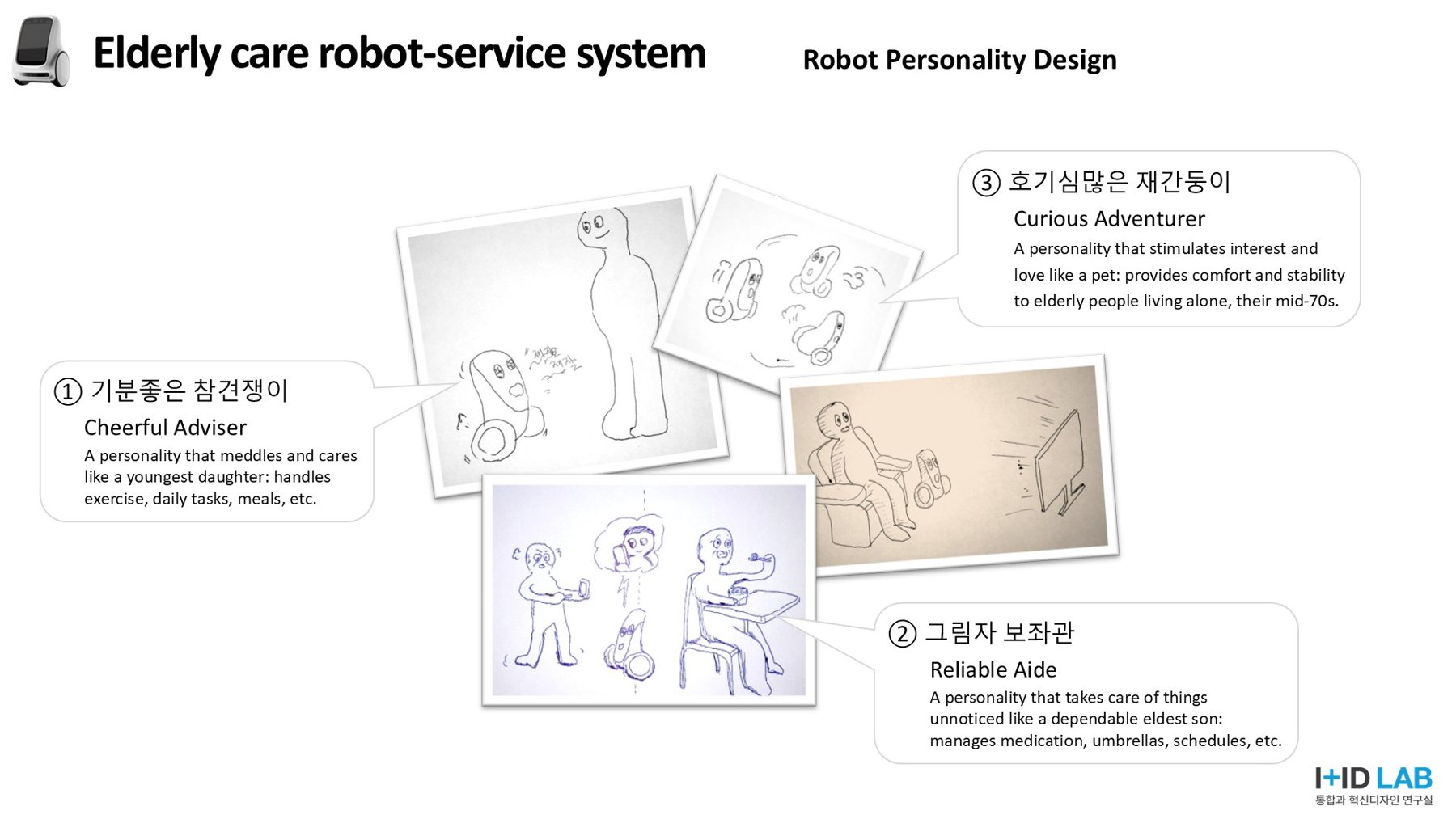
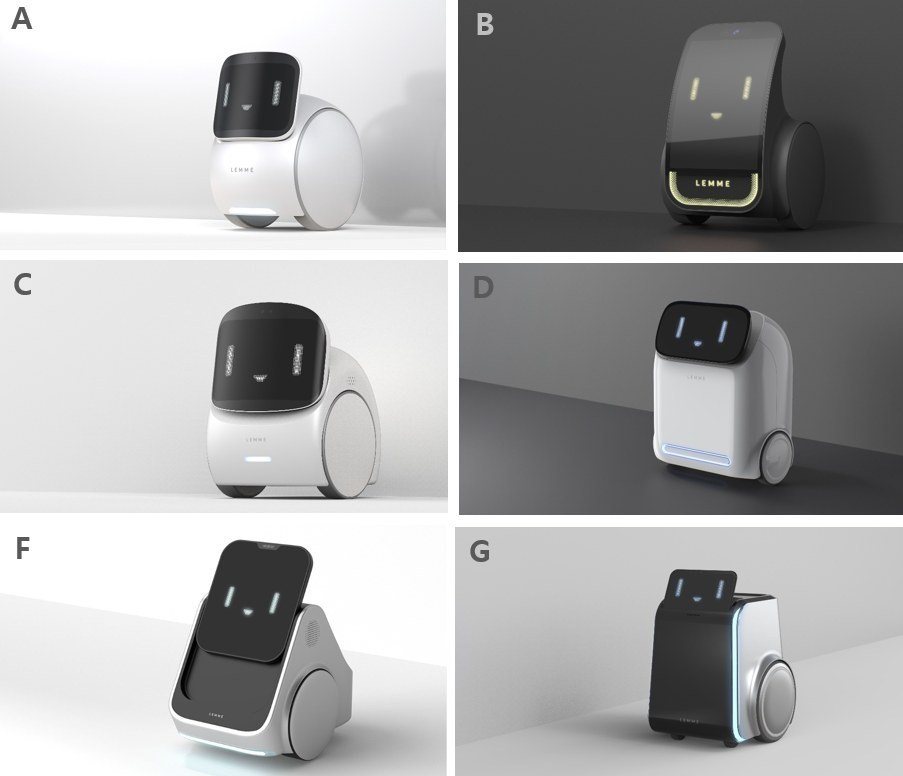
Size, form and character. Full-scale foam mock-ups of different sizes were compared in six households to settle Lemmy's size, and I took part in these size and form studies. The exterior was narrowed from 14 proposals to 7, then to 2 candidates and the final design, developed with J Design Works and Shinsung Delta Tech. In parallel, three personality concepts were sketched for different groups of users.
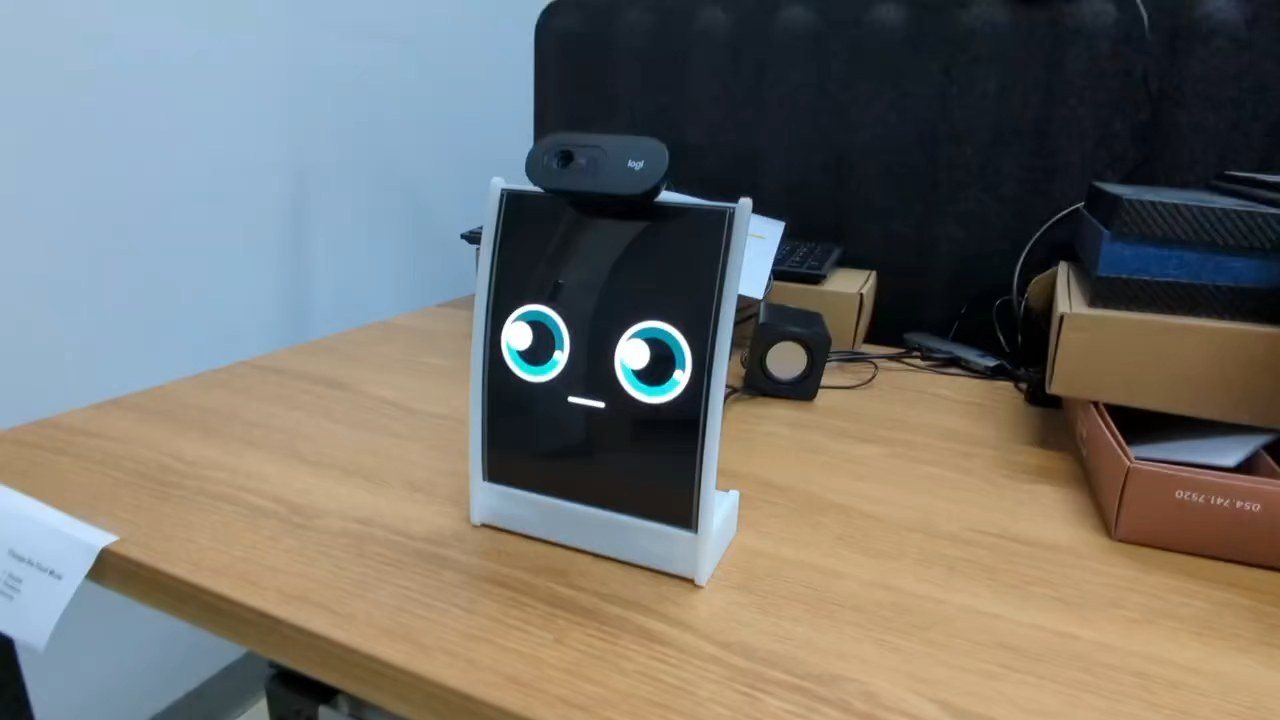
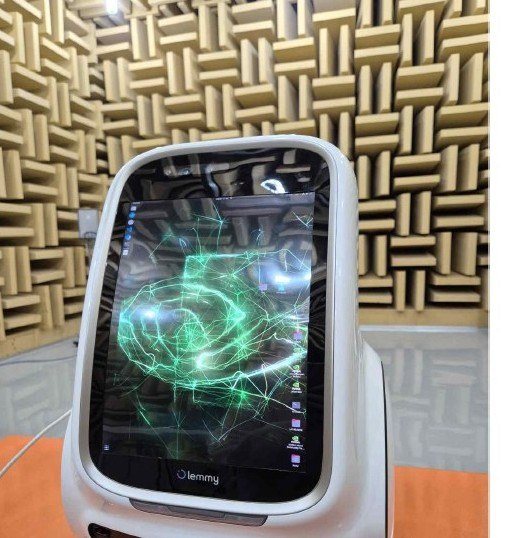
Expression. With the design team I worked on the expression catalogue: 23 emotions, each defined across the face on the display, movement, LED light, voice and sound, and tied to a line from a scenario. Besides basic emotions, it includes states a care robot needs, such as lonely, concerned, attentive and relieved.
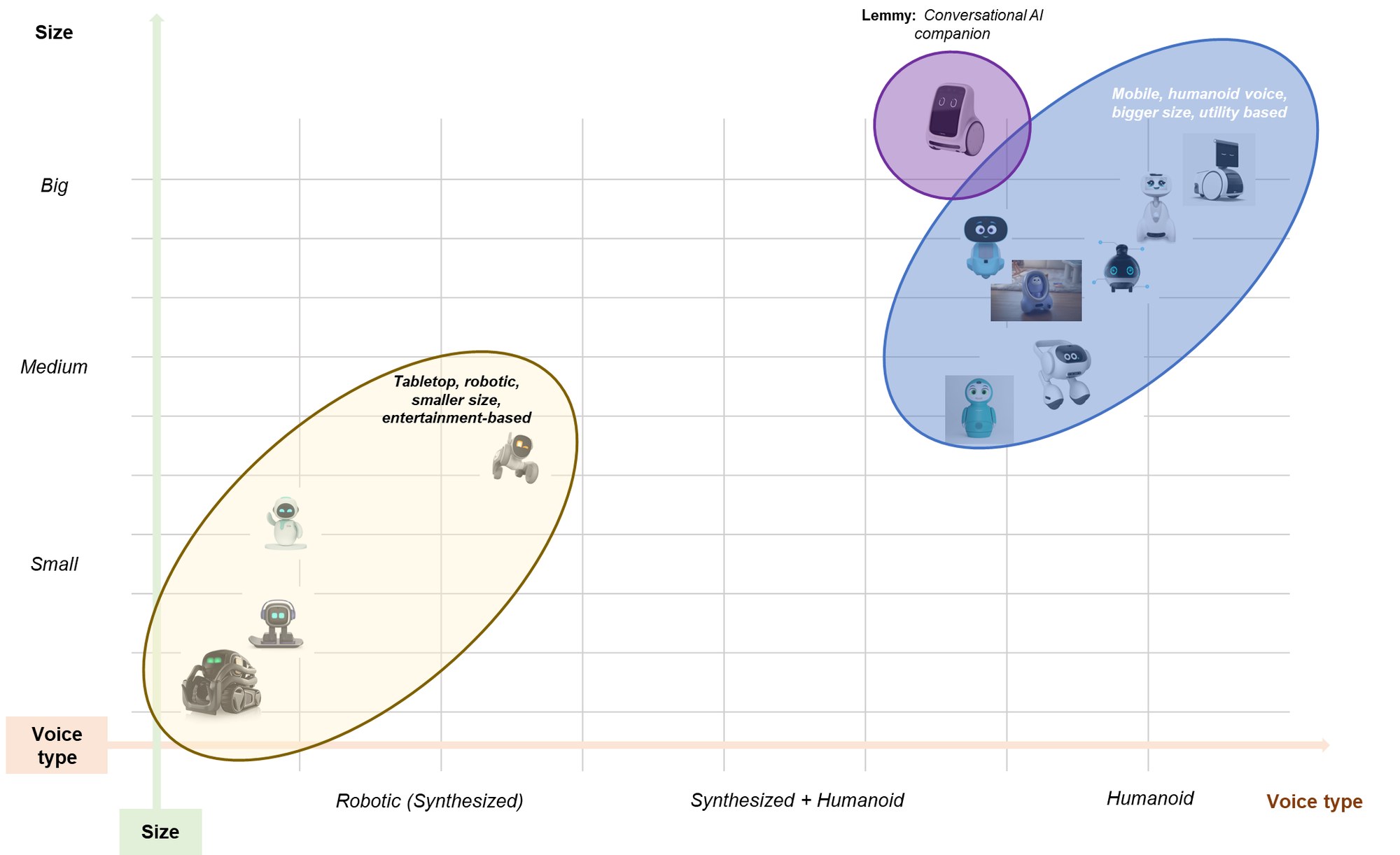
Voice. I benchmarked the voices of commercial companion robots and found that voice type follows a robot's size and role. For a mobile robot that older adults must understand easily, I chose a humanoid-leaning voice with a subtle synthetic identity, then produced a voice expression for each emotion in the catalogue with Typecast and documented the process.
Deliverables
- English scenario book and the prioritised scenario set
- Scenario-to-specification method and the functions-and-components list
- Voice expression set and its documentation for the expression catalogue
Outcomes
Team results: the consortium reached technology readiness level 7 with a working engineering sample of the robot, its charging station and the sensing pot; 18 design experts rated its design appeal at 86.7 out of 100; Lemmy was a CES 2025 Innovation Awards Honoree in Smart Home (entered by Shinsung Delta Tech) and was shown with seven prototypes at the 2025 Gwangju Design Biennale. The work also led to several publications on robot personality, actions and scenario-to-specification methods.
Related work11
Scenario-Oriented Specification (SOS): a design method for translating user scenarios into engineering specifications
Ismatullaev, U. V. U., & Kim, K.
Journal articleResearch in Engineering Design, 37(4), Article 362026DOI 10.1007/s00163-026-00498-w
Exploring the Role and Syntax of User Scenario Elements: Toward a Structured Framework for User-Centered Engineering Specifications
Ismatullaev, U. V. U., & Kim, K.
Conference paperIASDR 20252025DOI 10.21606/iasdr.2025.1104
A Component-Based Approach for Developing Actions in Non-Humanoid Elderly Care Robots
Sarfraz, D., Ismatullaev, U. V. U., & Kim, K.
Conference paperIASDR 20252025DOI 10.21606/iasdr.2025.1139
Scenario to specification: promises and pitfalls of AI in developing user-centered engineering specifications with interdisciplinary teams
Ismatullaev, U. V. U., & Kim, K.
Conference paperProceedings of the Design Society, 5, 2841–2850 (ICED 2025)2025DOI 10.1017/pds.2025.10298
Making Use of User Scenarios in Developing User-Centered Engineering Specifications
Ismatullaev, U. V. U., & Kim, K.
Conference paperKSDS Conference Proceedings, pp. 110–1152025
Introducing a framework to translate user scenarios into engineering specifications with "action steps"
Ismatullaev, U. V. U., & Kim, K.
Conference paperProceedings of the Design Society, 4, 23–34 (DESIGN 2024)2024DOI 10.1017/pds.2024.5
Dynamic personalities for elderly care robots: user-based recommendations
Lee, D., Kim, K., Saduakas, A., Ismatullaev, U. V. U., Kim, J., & Barrera Garza, B. P.
Conference paperIASDR 20232023DOI 10.21606/iasdr.2023.546
Toward more considerate designing of home exercise equipment for older adults: a qualitative analysis of the specific needs and challenges of older adults for physical exercise
Kim, J., Kim, K., Saduakas, A., Barrera Garza, B. P., Lee, D., & Ismatullaev, U. V. U.
Conference paperIASDR 20232023DOI 10.21606/iasdr.2023.575
Human Factors Considerations in Design for the Elderly
Ismatullaev, U. V. U., Saduakas, A., & Kim, K.
Conference paperHuman Factors in Aging and Special Needs, AHFE 2022 International Conference, Vol. 38, pp. 23–332022DOI 10.54941/ahfe1001660
Addressing the Gaps in Elderly Falling Prevention from the Perspective of a Human-Centered Design
Saduakas, A., Ismatullaev, U. V. U., & Kim, K.
Conference paperHuman Factors in Aging and Special Needs, AHFE 2022, Vol. 38, pp. 150–1562022DOI 10.54941/ahfe1001675
A User-Centered Design Specification Method in New Product Development
Ismatullaev, U. V. U., Barrera Garza, B. P., Lee, D., & Kim, K.
Conference paperKSDS Conference Proceedings (extended abstract), pp. 158–1592022